
Finding a reliable glassware factory in China is a huge challenge. Many buyers lose money because of late deliveries or poor quality. This makes your retail brand look bad and costs you customers. I wrote this guide to help you find the best partner for your business.
To choose the best China glassware factory for OEM, you must check ten things. These include their history, OEM skills, design options, and safety papers like FDA or LFGB. You also need to look at their daily output, quality checks, MOQ, lead times, costs, and communication style.
I have spent over ten years buying kitchenware for the Canadian market. I have seen many factories, from small workshops to massive plants. Picking the wrong one is a mistake you cannot afford. Keep reading to learn how I vet these suppliers so you can get the best products for your shelves.
How do I evaluate the production capacity of a glassware factory?
You need a factory that can handle large orders without making mistakes. If the factory is too small, they will fail when you grow. If they are too big and you are small, they might not care about your order.
To evaluate a factory, you must check their daily output and the machines they use. A good factory should have a mix of automated and manual lines. For example, my partner PYGLASS has a 200,000㎡ base in Zibo. This size shows they can handle mass production for brands like Walmart or Costco.
Understanding Production Tiers
I always look at how the factory makes their glass. There are two main ways: machine pressing and machine blowing. Machine pressing is great for heavy bowls and storage containers. Machine blowing is better for thin cups and wine glasses. I prefer factories that use modern automated lines because the quality is the same for every piece. If a factory uses too much manual labor for a huge order, the sizes might vary. This is a big problem for stackable items.
Analyzing Scale and Hubs
Location matters a lot in China. Most high-quality glassware comes from places like Shandong, Jiangsu, or Guangdong. I have visited many factories in these hubs. The factories in Shandong are famous for borosilicate glass. This glass is very strong and safe for ovens. I check if the factory has its own kilns. Some “factories” are just trading companies that buy from others. I avoid these. A real factory controls the heat and the cooling of the glass. This process is called annealing. If the annealing is bad, the glass will break easily.
Capacity Comparison Table
| Feature | Small Workshop | Mid-Sized Factory | Large Manufacturing Base (e.g., PYGLASS) |
|---|---|---|---|
| Daily Output | Less than 5,000 units | 10,000 to 30,000 units | Over 100,000 units |
| Machinery | Mostly manual or old | Semi-automated | Fully automated high-speed lines |
| Quality Control | Visual only | Basic QC team | Strict ISO 9001 and AQL standards |
| Best For | One-time small gifts | Growing brands | Large retailers and global brands |
I always ask for a video tour of the production floor. I look for clean spaces and organized workers. If the floor is messy, the glass will likely have dust or scratches. I also check their storage capacity. A factory must have a large warehouse to keep your goods safe before they ship to Canada or Europe.
What specific OEM capabilities should I look for in a Chinese manufacturer?
OEM stands for Original Equipment Manufacturer. This means the factory makes your specific design. You need a factory that can take your 3D drawing and turn it into a real glass container.
Look for a factory with a strong engineering team and clear mold ownership rules. They should offer custom shapes, colors, and logo printing. A professional supplier like PYGLASS provides design support to make sure your product is leak-proof and space-saving.
The Importance of R&D Support
When I design a new glass food container, I need the factory to tell me if the design works. Sometimes a shape looks good on paper but breaks in the kiln. I look for factories that have an in-house R&D team. They should use CAD software to test the design before making a mold. I once worked with a supplier who didn’t check my design. The lids didn’t fit the glass base. I lost thousands of dollars. Now, I only work with suppliers who provide 3D samples first.
Customization and Post-Processing
OEM is more than just the glass. It is also about how the product looks. You might want a logo etched on the bottom or a colorful silicone sleeve. I check if the factory can do ion plating or high-temperature decal firing. These are advanced skills. Many factories can only make plain glass. If you want a unique brand, you need a partner who can handle complex decorations. This helps your product stand out on Amazon or in a supermarket.
Common OEM Services and Expectations
| Service Type | What the Factory Does | Why It Matters for Your Brand |
|---|---|---|
| Custom Molds | Create a new shape based on your design. | Gives you a unique product nobody else has. |
| Logo Application | Silk screen, laser etching, or decals. | Builds brand recognition for your customers. |
| Custom Packaging | Create branded boxes and inserts. | Reduces breakage and improves the unboxing experience. |
| Material Choice | Soda-lime, borosilicate, or tempered glass. | Matches the price point and safety needs of your market. |
I also ask about mold costs. Usually, a custom mold costs between $800 and $3,000. I always make sure I own the mold. You do not want the factory selling your unique design to another buyer. I put this in my contract. A good supplier will agree to this because they value a long-term partnership.
How can I ensure the factory meets my design specifications?
You must have a clear process for checking quality. If you do not give the factory exact rules, they will make their own. This often leads to products that do not match your vision.
I ensure compliance by requesting physical samples and using strict AQL inspection standards. I also check for international safety papers like FDA, LFGB, and DGCCRF. These papers prove the glass is safe for food and has no lead or cadmium.
Setting Clear Tolerances
Glass is a natural material. It is not always perfect. I define what is “good enough” by setting tolerances. For example, I tell the factory that the weight of a bowl can only vary by 5%. I also define what a “defect” is. Air bubbles, scratches, and uneven rims are common problems. I use the AQL (Acceptable Quality Level) system. Usually, I allow zero critical defects and only a few minor ones. If the factory knows I will hire a third-party inspector like SGS, they work much harder to be perfect.
Safety and Compliance Testing
As a buyer in Canada, I face legal risks if my products are unsafe. I always ask for recent test reports. I don’t just look at a PDF. I check the report number on the testing company’s website. I look for ISO 9001 for the factory management and BSCI for worker safety. PYGLASS is a good example because they pass audits for Walmart and Costco. This gives me peace of mind. I know the workers are treated well and the glass is clean.
Glass Quality Standards Checklist
| Quality Factor | What to Look For | Reject If You See This |
|---|---|---|
| Clarity | Clear, bright glass with no tint. | Yellow or green tint in clear glass. |
| Surface | Smooth and shiny finish. | Visible waves, scratches, or “orange peel” texture. |
| Bubbles | Small bubbles are okay in some manual glass. | Large bubbles or many small bubbles in one spot. |
| Stability | The bottom must be flat and not wobble. | The container rocks when placed on a table. |
I also perform a “thermal shock” test on samples. I take a glass container from the freezer and put it into a hot oven. Borosilicate glass should not break. If the sample breaks, I know the material is poor quality. I do these tests myself before I agree to a big production run.
What are the lead times for custom OEM glassware orders?
Lead times are the biggest pain for any purchasing manager. If the goods are late, you miss the peak season. In Canada, if I miss the Christmas shopping window, I lose a lot of revenue.
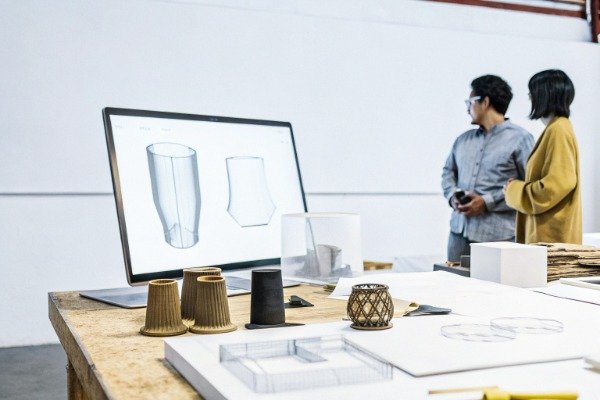
A typical lead time for a custom order is 30 to 45 days after you approve the sample. Samples usually take 7 to 15 days to make. You must also factor in 20 to 30 days for sea shipping from China to North America or Europe.
Managing the Production Timeline
I always start my planning six months before I need the goods. First, we spend a few weeks on the design. Then, the factory makes the mold. This takes about 15 to 20 days. After that, we make the first sample. I check the sample in Canada and ask for changes. Once I say “yes,” the mass production starts. I ask for weekly updates. A good supplier will send me photos of the production line. This proves they are actually working on my order.
Risks and Delivery Reliability
Many things can delay an order. China has holidays like the Lunar New Year when factories close for weeks. Also, environmental rules can sometimes stop production if a factory has high emissions. I choose factories that use clean energy or have modern filters. This reduces the risk of a sudden shutdown. I also look at their location. Factories near ports like Qingdao or Tianjin are better. They can get the goods onto a ship faster, which saves me time and money.
Estimated OEM Order Timeline (Total ~90 Days)
| Phase | Duration | Key Actions |
|---|---|---|
| Design & Mold | 20-30 Days | Drawing approval and mold creation. |
| Sampling | 7-15 Days | Producing and shipping the “Golden Sample.” |
| Mass Production | 30-45 Days | Melting glass, forming, annealing, and packing. |
| Shipping | 20-40 Days | Sea freight from China to your local port. |
I always include a “late delivery” clause in my contracts. If the factory is late by more than two weeks, they pay a small penalty. This makes them prioritize my order. I also work with suppliers who have large warehouses. If I have a sudden spike in sales, they might have some extra stock or raw materials ready to go. This flexibility is very important for my business in 2026.
Conclusion
Choosing a China glassware factory for OEM is a big decision that requires a lot of research. You must look past the price and focus on capacity, OEM skills, quality control, and lead times. I have learned that a mid-range, professional factory like PYGLASS is often better than the cheapest option. They offer the safety and design innovation that modern consumers want. If you follow these ten factors, you will build a strong brand with high-quality products.
Footnotes
- Definition of the manufacturing term OEM.
- Official FDA guidance on food contact substances.
- Definition of the testing phenomenon mentioned.
- Official page for the BSCI social compliance standard.
- Official standard page for ISO 9001.
- Leading inspection company mentioned in the text.
- Explanation of the AQL quality standard.
- Definition of the software used for design.
- Explanation of the glass annealing process.
- Definition of the specific glass type mentioned.

 English